
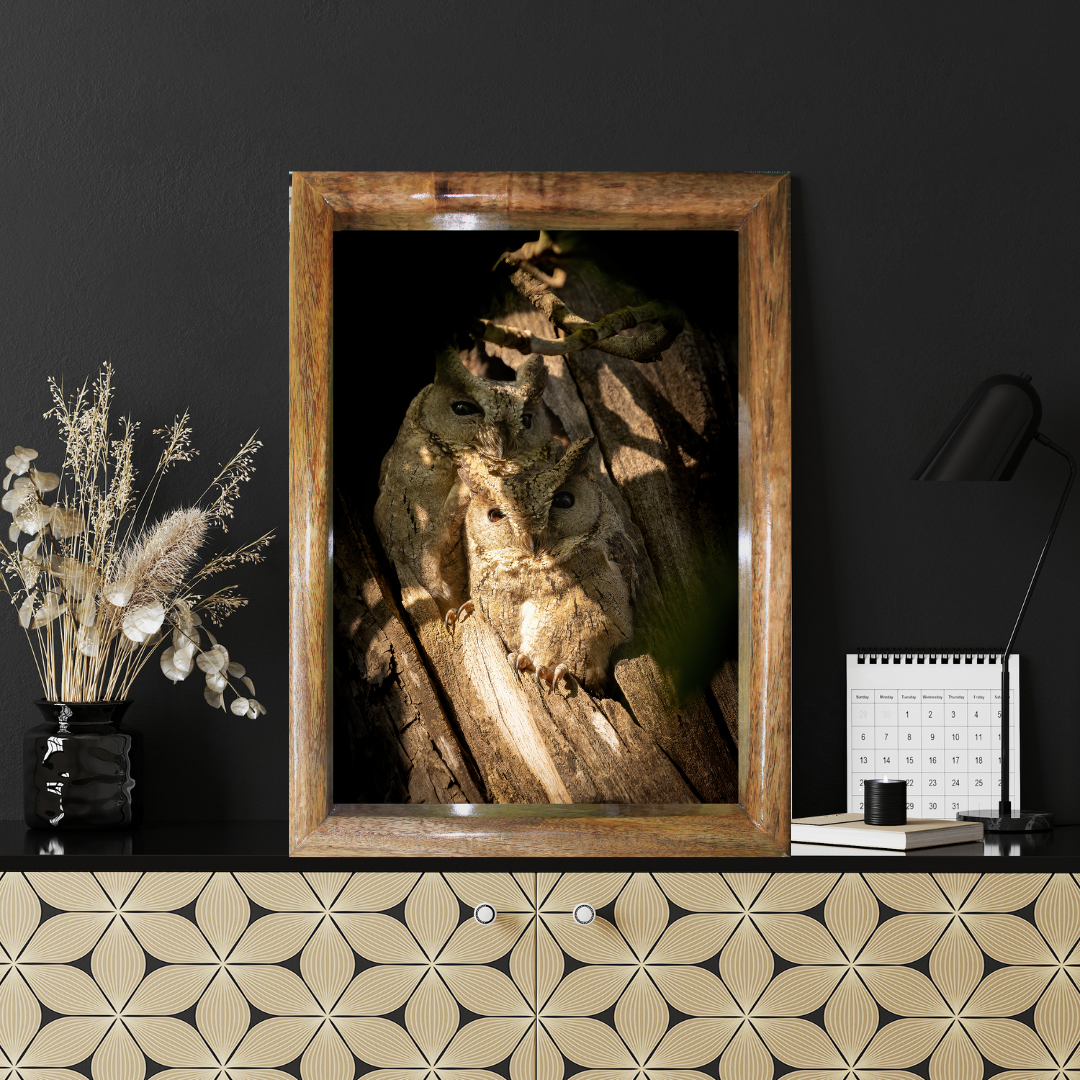
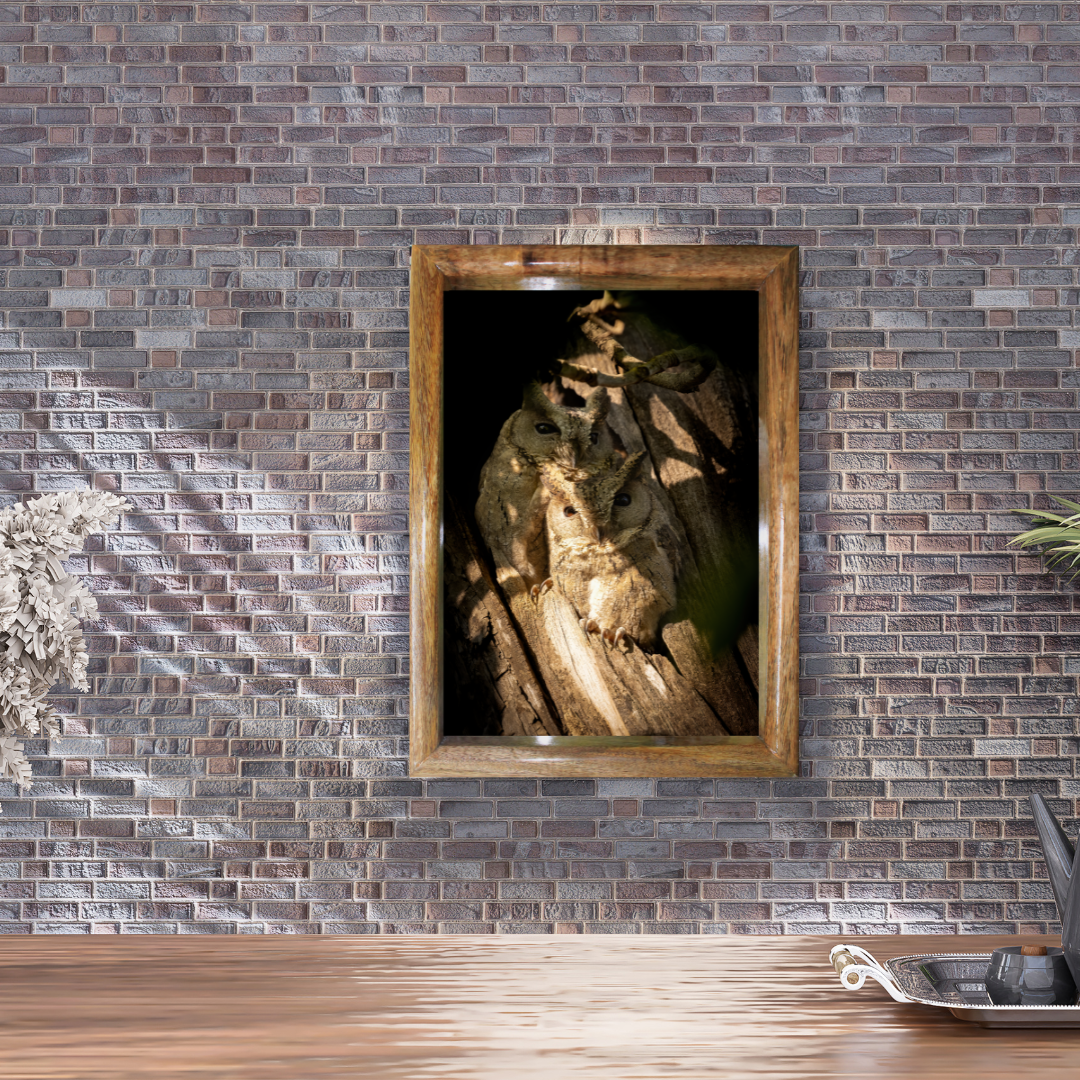
Indian Scops Owl Pair | Framed Wildlife Photography Print | Gir Forest | Wall Art for Living Room, Study & Office
Important elements of Art :
STATEMENT ART
Open edition
Art Level: Issue Level
Frame Material: Wood
Back Material: Medium Density Fiberboard
Art Cover: TrueVue Glass
SKU: WILDGRAPHYX00175
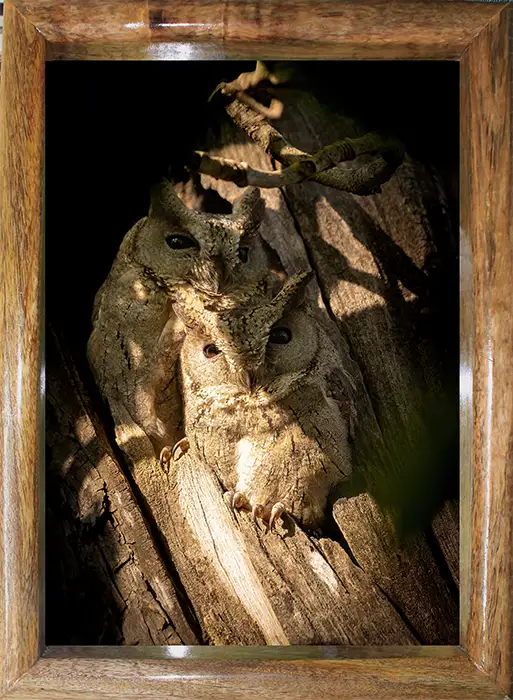
Two owls. One hollow. A moment that almost didn't happen.
This is not a studio shot. There was no setup, no staged perch, no artificial light. What you see here is the real thing — two Indian Scops Owls caught in the quiet grace of an early Gir morning, pressed together inside a sun-cracked tree hollow as the forest slowly woke around them.
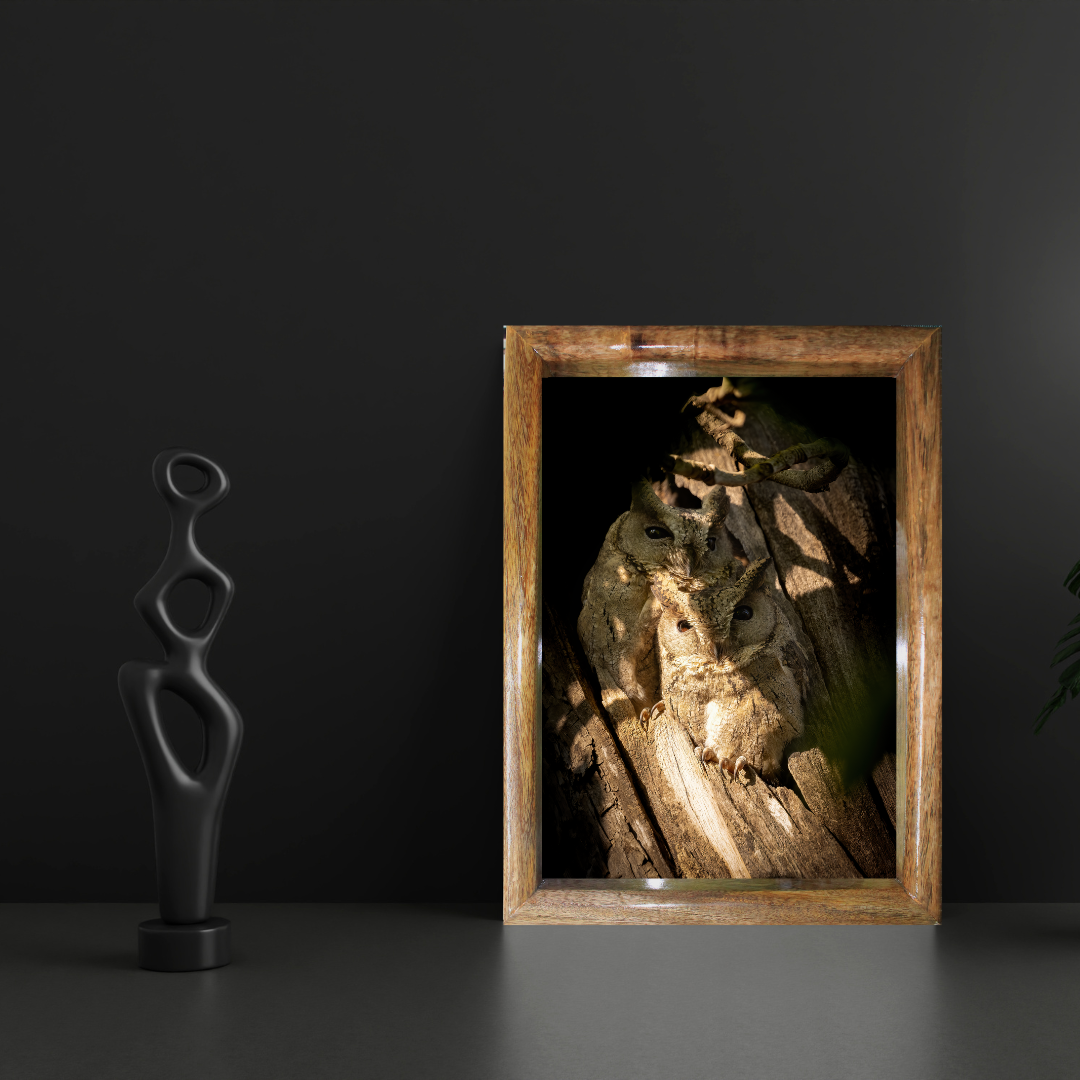
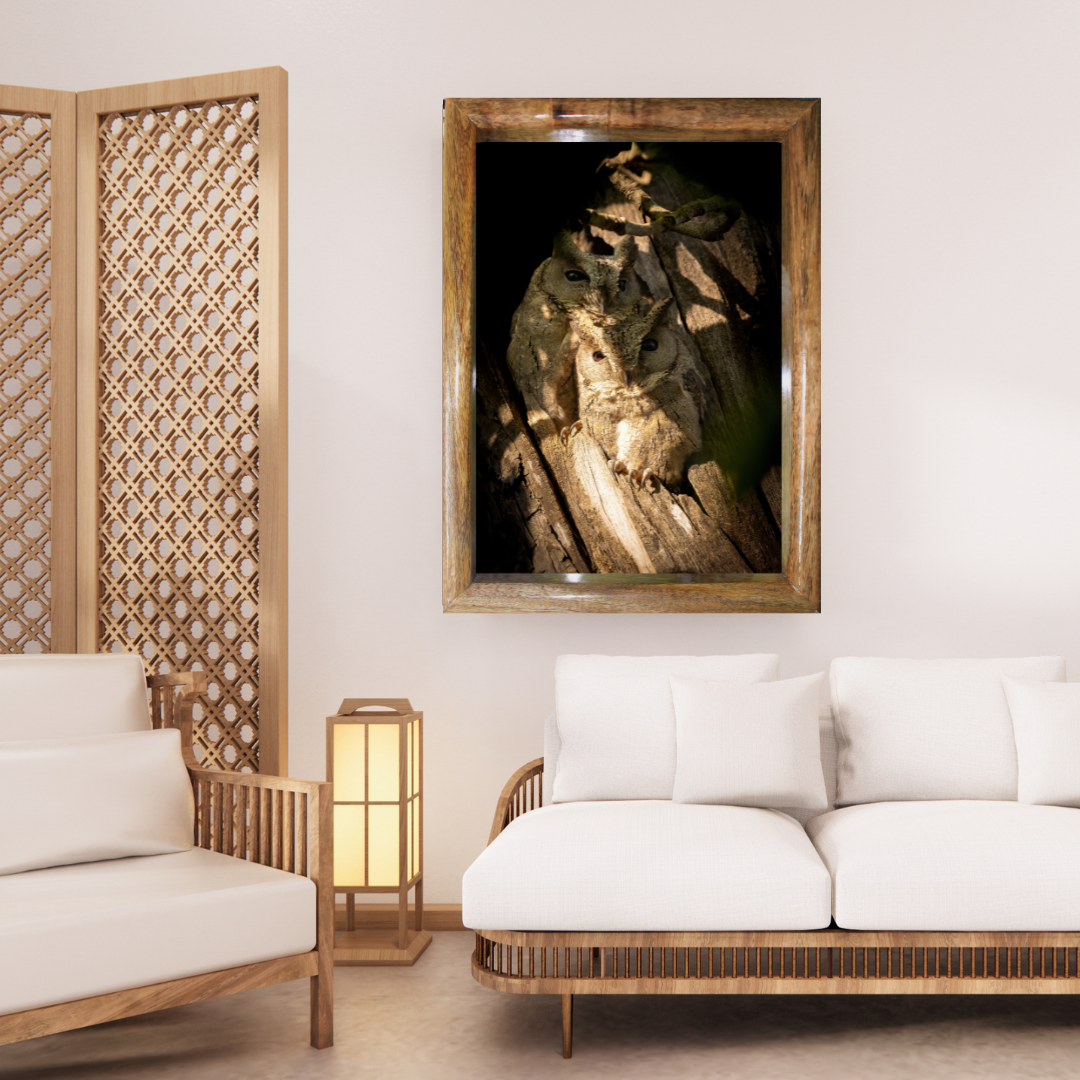
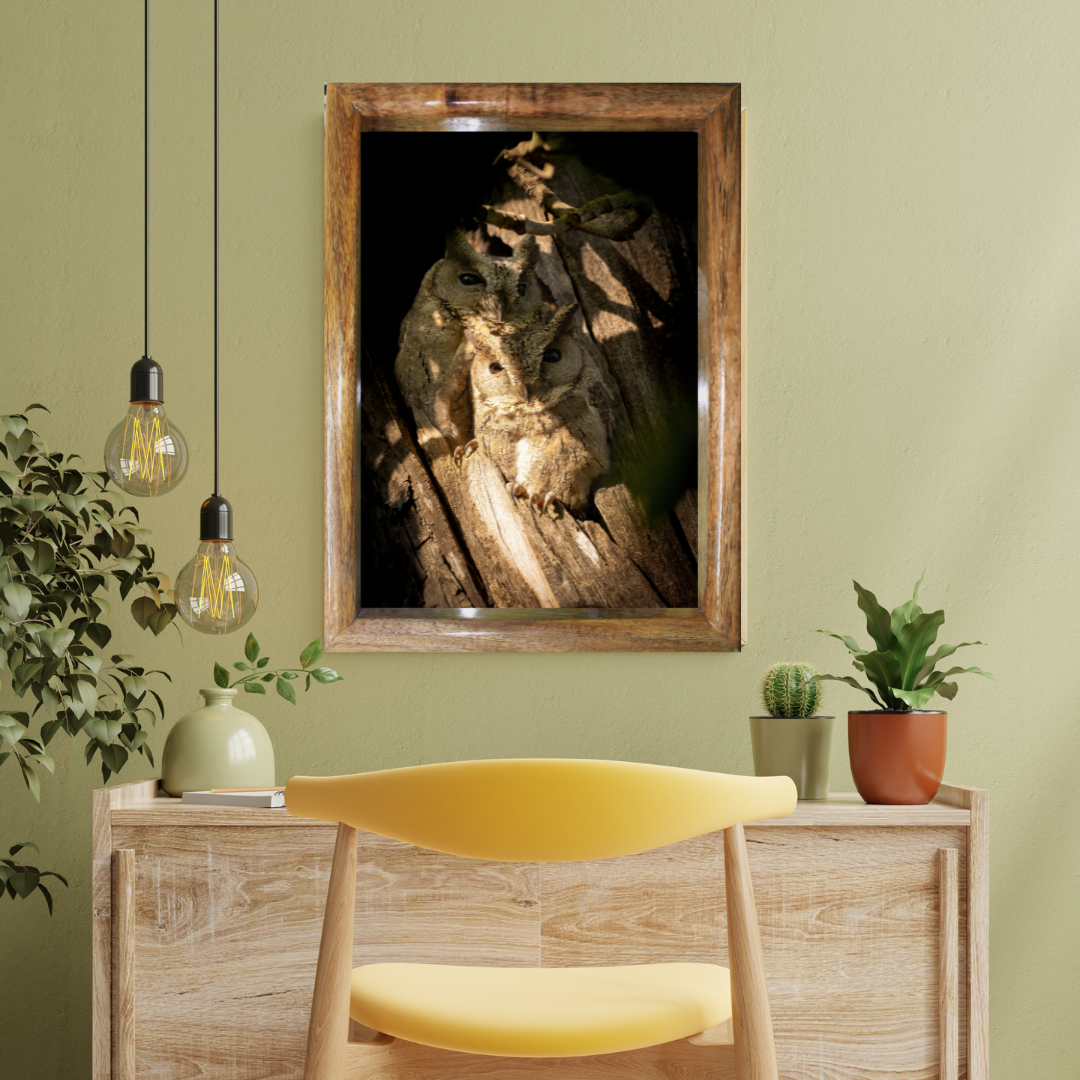
The photograph has been fine art printed and set inside a solid mango wood frame — hand-finished, rich in grain, warm in tone. It does not shout. It draws you in, the way a good piece of art should.
What makes this piece rare:
- Indian Scops Owls are masters of camouflage — spotting one is luck. Finding two, side by side, in open light, with one appearing to call — that borders on extraordinary
- Photographed in the wild interior zone of Gir National Park, Gujarat — the only place in the world where Asiatic lions and these elusive owls share the same ancient forest
- Every print is made on archival-quality fine art paper with pigment inks rated for 100+ years of display without fading
- Solid mango wood frame, hand-finished — no MDF, no composite, no shortcuts
- Ready to hang from the moment it arrives
This is the kind of piece that guests notice first and ask about longest. It carries a story — and that story is real.
The Story — The Two Who Stayed
The alarm had gone off at 4:40 AM.
Photographer Pankaj Singh had been coming to Gir for 4 years, mostly for the lions, occasionally for the leopards, and once — memorably — for a sloth bear who had absolutely no interest in being photographed. That particular morning in early December, he had no specific plan. Just a flask of chai, a camera bag he had packed the night before, and the kind of quiet restlessness that serious wildlife photographers will understand.
He had entered the forest's interior zone before first light, following a narrow track he knew well enough to navigate without a torch. The jungle at that hour is not silent — it hums with insects, creaks with the slow expansion of wood, breathes in a way that is hard to describe to anyone who hasn't stood inside it. By 5:20 AM, the sky had begun to shift from black to deep indigo. The trees were becoming shapes.
He had passed this particular dead teak trunk many times before. It was unremarkable — split down the middle by lightning years ago, hollowed by termites, leaning at the kind of angle that suggested it had one monsoon left in it. He almost walked past.
Almost.
A sliver of early light had worked its way through the canopy and landed — with the precision of something entirely accidental — on the lower half of the hollow. And inside that hollow were two Indian Scops Owls.
Now, the Indian Scops Owl is not a rare species, technically speaking. But you wouldn't know that from trying to photograph one. They are the forest's finest illusionists. Their bark-patterned plumage matches dead wood so perfectly that even experienced guides will stare at a tree for thirty seconds before realizing the tree is looking back at them. In 5 years of Gir visits, Pankaj had photographed exactly four — all solitary, all half-hidden, all captured at the very edge of usable light.
These two were neither hiding nor particularly concerned.
The larger of the pair — the adult, positioned slightly behind and above — had one eye open and the other half-lidded in the satisfied way of a creature that has spent the night hunting and is now deeply uninterested in anything the morning has to offer. The smaller owl, pressed close against it, appeared to be calling softly — beak slightly parted, throat working. Whether it was communicating with its companion or simply greeting the arriving day, Rahul could not say. He chose to believe it was both.
He stayed for forty minutes.
He did not speak. He barely moved. He shot 200 frames and later, in the careful light of his editing screen, kept 5. This image is the one he has kept on his own wall ever since — not because it is technically the best of the 5, but because every time he looks at it, he is back in that forest at 5:47 AM, cold fingers, lukewarm chai, the whole impossible ordinary magic of a morning that could have been nothing.
It turned out to be everything.
Choose options